
island way pools
Company Name:
Possible Related:
Company Owner:
Prior Owner
Licensed?:
License State:
License Number:
CURRENT STATUS:
Company Name: Island Way Pools, inc.
Possible Related: PCS Pools
Company Owner: Justin Hidalgo
Prior Owner: Lance Hidalgo, Jordan Hidalgo
Licensed?: Yes
License State: Florida
License Number: CPC1459475
CURRENT STATUS: Active
Island Way Pools, inc.
PCS Pools
Justin Hidalgo
Lance Hidalgo, Jordan Hidalgo
Yes
Florida
CPC1459475
Active
“Island Way Pools”
• Alleged consumer complaints about unfinished pools
• Alleged consumer complaints about lack of communication
• alleged ongoing litigation
Our advice: document the site, and contact your state licensing board if you have abandoned jobs.
Island Way Pools, Construction Concerns, and the Hidden Risk of alleged Online Review Removal
Before you sign a high‑value construction contract, it’s vital to understand both the facts about Island Way Pools and the growing problem of unauthorized online review removal that can distort what you see when you research any contractor.
Island Way Pools: What the Public Record Actually Shows
When homeowners hear alarming phrases like “construction fraud,” it is natural to worry. However, as of April 2026, there are no publicly confirmed news reports, court decisions, or regulatory findings that establish Island Way Pools as having committed construction fraud. Independent research into legal databases and news coverage does not reveal verified fraud claims against the company.
There is a notable 2022 Florida case, John Redderson v. Island Way Pools LLC, in which the court found the company was acting as an unlicensed residential pool contractor at the time of contracting. The homeowner sought to recover nearly $97,912.50 paid under that agreement, and the dispute centered on licensing and the company’s ability to enforce the contract, not on proven fraud (docketalarm.com).
Online, reviews of Island Way Pools are mixed. The company’s own website highlights glowing testimonials praising communication, design, and craftsmanship, many from 2025 (islandwaypools.net). Third‑party platforms tell a more complex story: some customers rave about professionalism and smooth permitting, while others describe stressful builds, delays, and miscommunication. On a Yelp‑sourced listing, for example, Island Way Pools shows an average of about 2.4 out of 5 stars from 17 reviews, with a cluster of one‑star complaints (local.yahoo.com; bestprosintown.com).
At the same time, the company has announced regional expansion and high‑profile projects, such as an elevated “second‑story” pool, positioning itself as a custom pool leader in Tampa Bay (streetinsider.com). This mix of praise, criticism, and growth underscores why consumers should approach any large construction contract with careful due diligence, not panic or rumor.
📌 Key Takeaway: As of April 2026, Island Way Pools has faced alleged licensing and customer‑service concerns, but no verified court finding of “construction fraud.” Treat online accusations cautiously and look for documented facts.
Why Rumors of “Fraud” Spread So Easily in the Age of Online Reviews
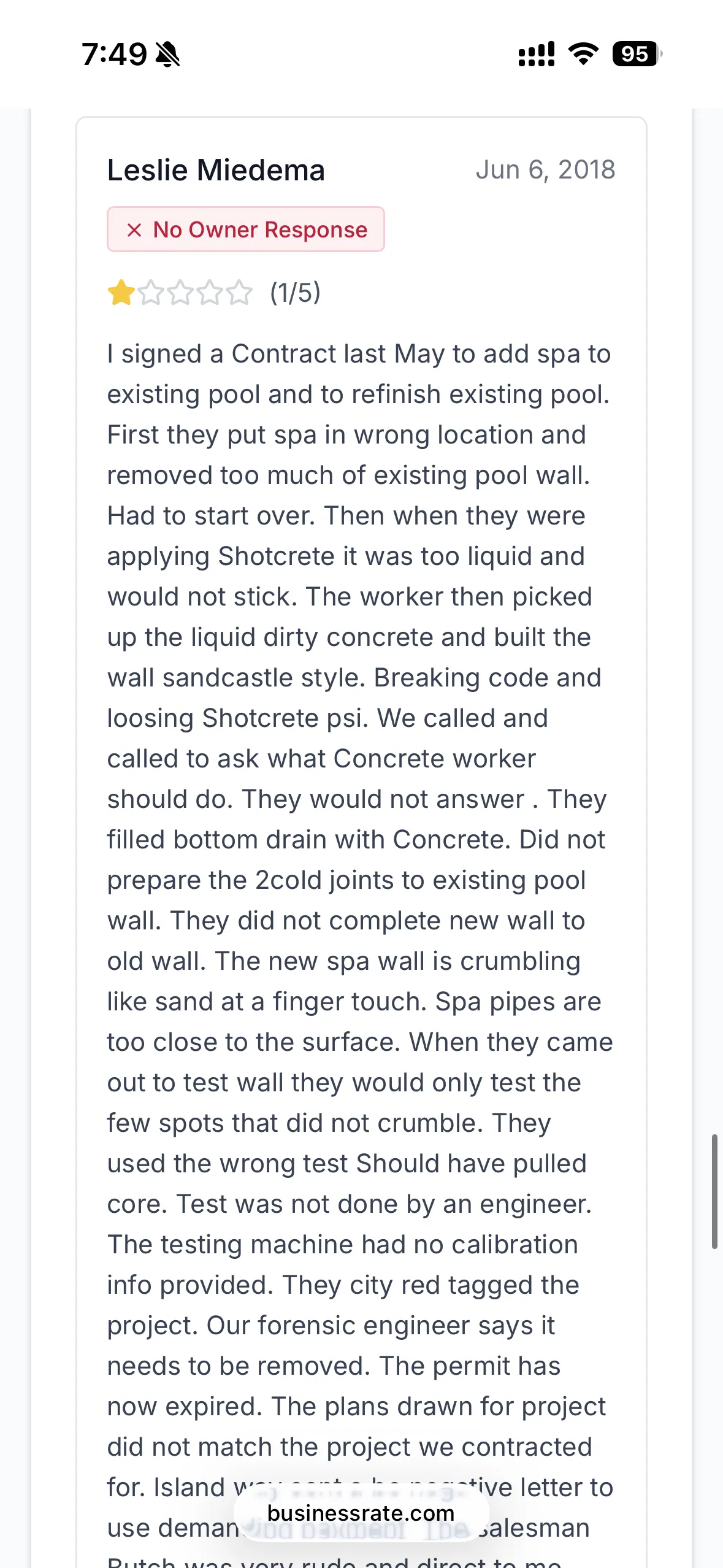
A single angry post calling a contractor “a criminal” or “a fraud” can spread quickly, even when it is based solely on one person’s experience or perception. In at least one discussion thread about Island Way Pools, a commenter claimed the owner was “a big criminal” and suggested negative reviews were being deleted (justanswer.com). This is a serious accusation which has been verified by residual review data tracers left behind (businessrate.com).
For homeowners, the lesson is twofold: do not ignore red flags—like licensing disputes or a pattern of poor reviews—but also do not equate every angry post with proven fraud. True construction fraud usually involves intentional deception, such as taking money with no intention of performing the work, falsifying permits, or forging documents. Those are claims that tend to leave a trail in court filings or regulatory actions, which, to date, has not emerged against Island Way Pools in the public record (as of early 2026).
The Hidden Problem: Unauthorized Online Review Removal
Even when you research carefully, what you see online may not reflect the full picture—because some reviews are quietly removed. Sometimes this is legitimate: major platforms like Amazon and Google aggressively filter reviews they suspect are fake, biased, or abusive. In early 2026, Amazon reported that roughly 44 % of removed reviews were tied to conflicts of interest, such as paid or incentivized posts (alibaba.com).
Google also updated its local review moderation, pulling content that appears to be spam, harassment, or posted from suspicious networks (reviewsense.ai). The downside is that legitimate negative reviews can sometimes, making a business look cleaner than it really is. Consumers may never know whether a missing one‑star review was removed by an algorithm, a platform policy decision, or a complaint from the business itself.
Reviews "removed" from the Google platform without consumer consent
Review moderation can erase both fake praise and genuine criticism, skewing perception.
When Review Removal Crosses the Line from Moderation to Manipulation
There is a crucial difference between platforms enforcing their rules and a business actively trying to silence honest criticism. In the United States, the Consumer Review Fairness Act makes it illegal for companies to use contract clauses that ban or punish honest reviews. And since 2024, the U.S. Federal Trade Commission (FTC) has adopted a Consumer Reviews and Testimonials Rule that targets fake reviews and the suppression of negative feedback. In late 2025, the FTC warned 10 companies that manipulating reviews could lead to penalties of up to $53,088 per violation (crowell.com; legalclarity.org).
As of April 2026, there are no public enforcement actions specifically accusing Island Way Pools of illegally removing or manipulating reviews. However, the broader trend is clear: regulators are watching. If any business pressures customers to delete negative posts, files baseless legal threats to force takedowns, or floods platforms with fake positives, it may face serious legal consequences.
💡 Pro Tip: If your honest review vanishes, politely ask the platform why. If you feel a business is retaliating or threatening you for speaking up, document everything and consider consulting an attorney who understands online reputation and consumer law.
How Homeowners Can Protect Themselves Before Hiring Any Pool Builder
Verify licensing and insurance independently. Look up the contractor on your state licensing board, not just on their website. For Florida, confirm that the specific company name and qualifier match the license on record. If you request proof of insurance, the company has 30 days to respond with proof of insurance.
Read reviews across multiple platforms. Compare testimonials on the company’s site with ratings on Google, Yelp, and niche sites. A mix of praise and criticism is normal; pay attention to patterns in the complaints.
Ask for recent references. Request contact details for customers whose projects finished in the last 6–12 months and speak with them directly about communication, change orders, and timelines.
Watch contract language about reviews. Any clause that restricts you from leaving an honest review, or demands you seek approval before posting, is a major red flag and may be unenforceable under federal law.
Document everything. Keep copies of proposals, change orders, emails, texts, and photos. If a dispute arises—or if you suspect a pattern of unfair behavior—solid documentation is your best protection.
Final Word: Stay Alert, but Stay Grounded in Evidence
Island Way Pools is a pool builder with both enthusiastic supporters and strongly dissatisfied critics. There has been at least one significant licensing dispute and a number of negative customer experiences, but no verified finding of construction fraud in the public record as of April 2026. At the same time, the wider ecosystem of unauthorized or opaque review removal means that what you see online—about Island Way Pools or any contractor—may not tell the whole story.
The most powerful step you can take is to combine independent fact‑checking (licenses, court records, regulator sites) with broad review research and clear, written agreements. Stay alert to red flags, but base your decisions on documented evidence, not rumors. In an era when both fake praise and unfairly removed criticism can distort reality, an informed, skeptical, and methodical approach is your best defense before you invest tens of thousands of dollars in a backyard pool—or any major construction project.
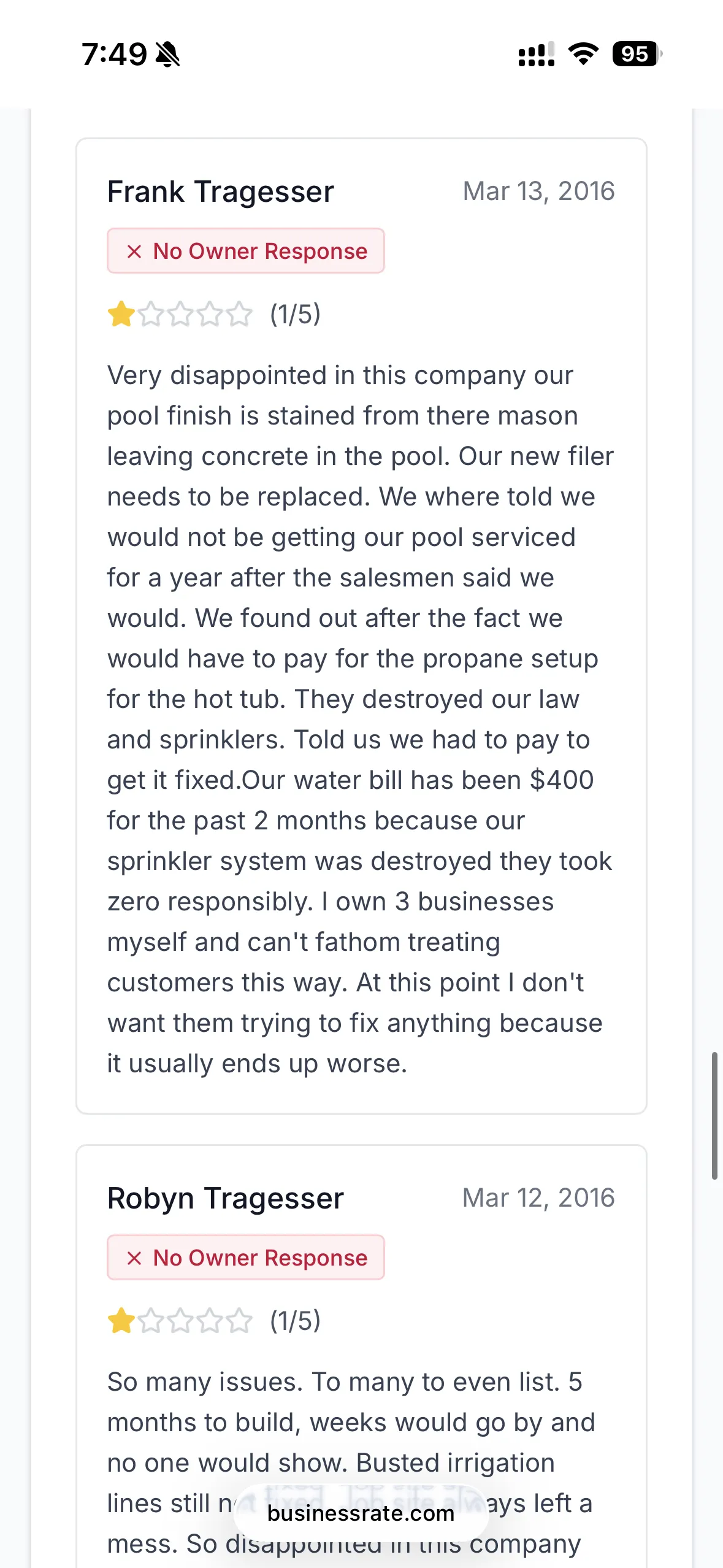
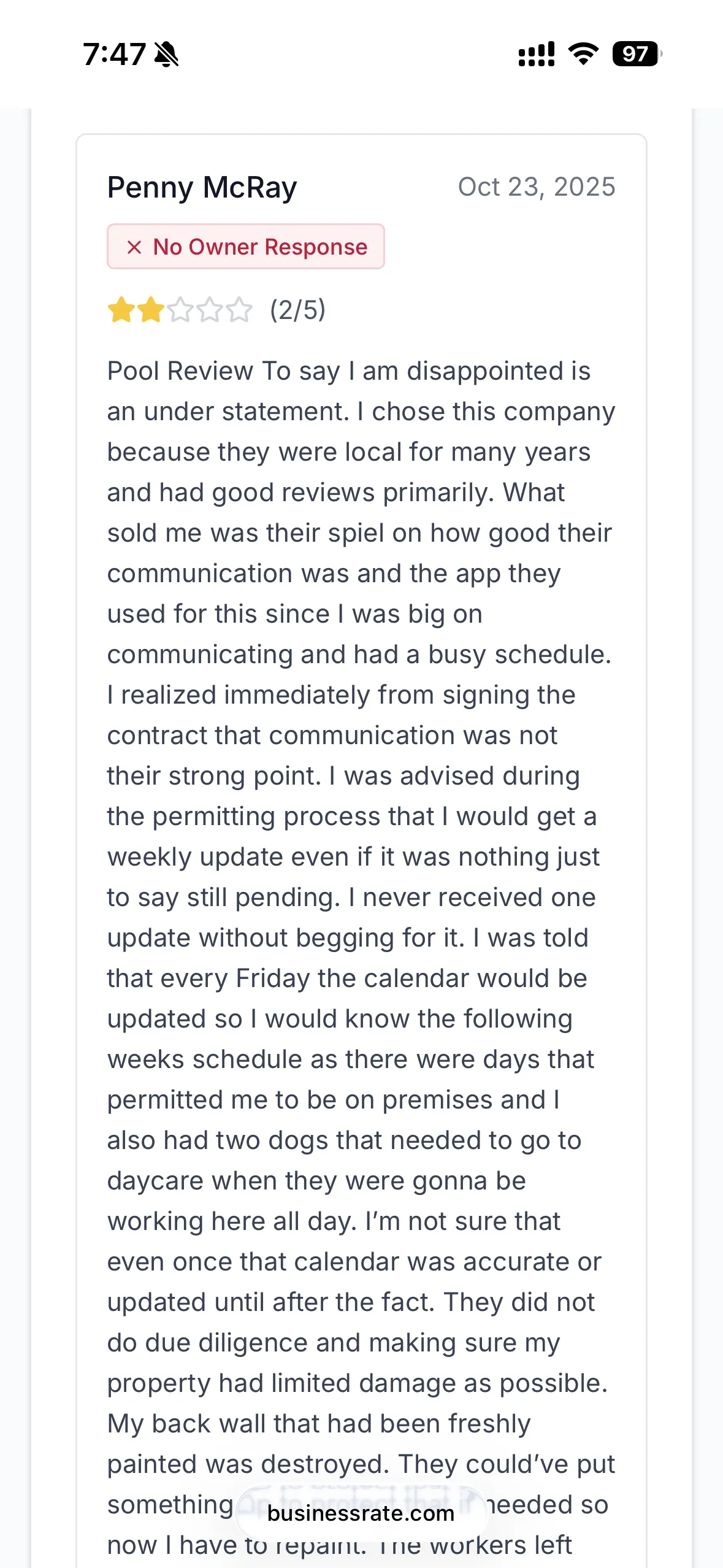
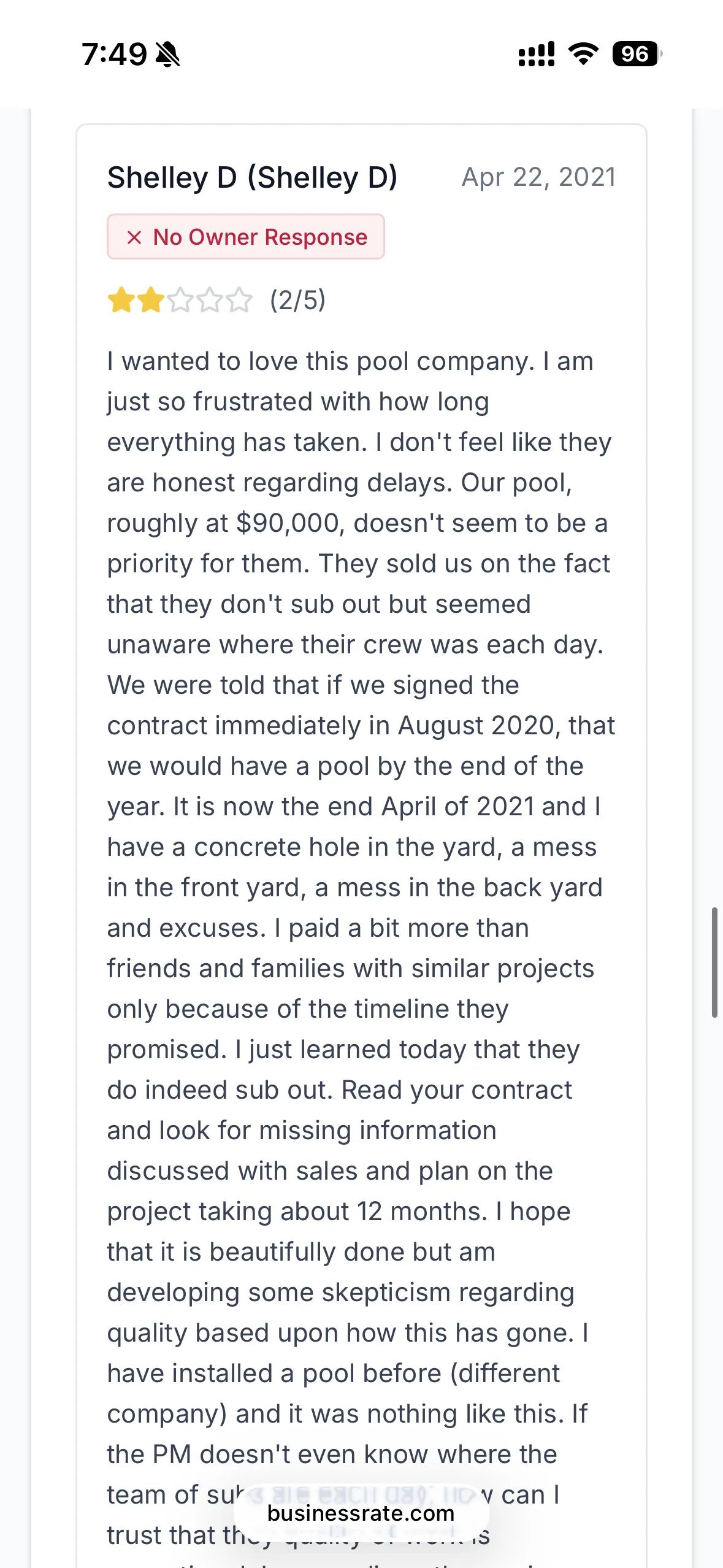
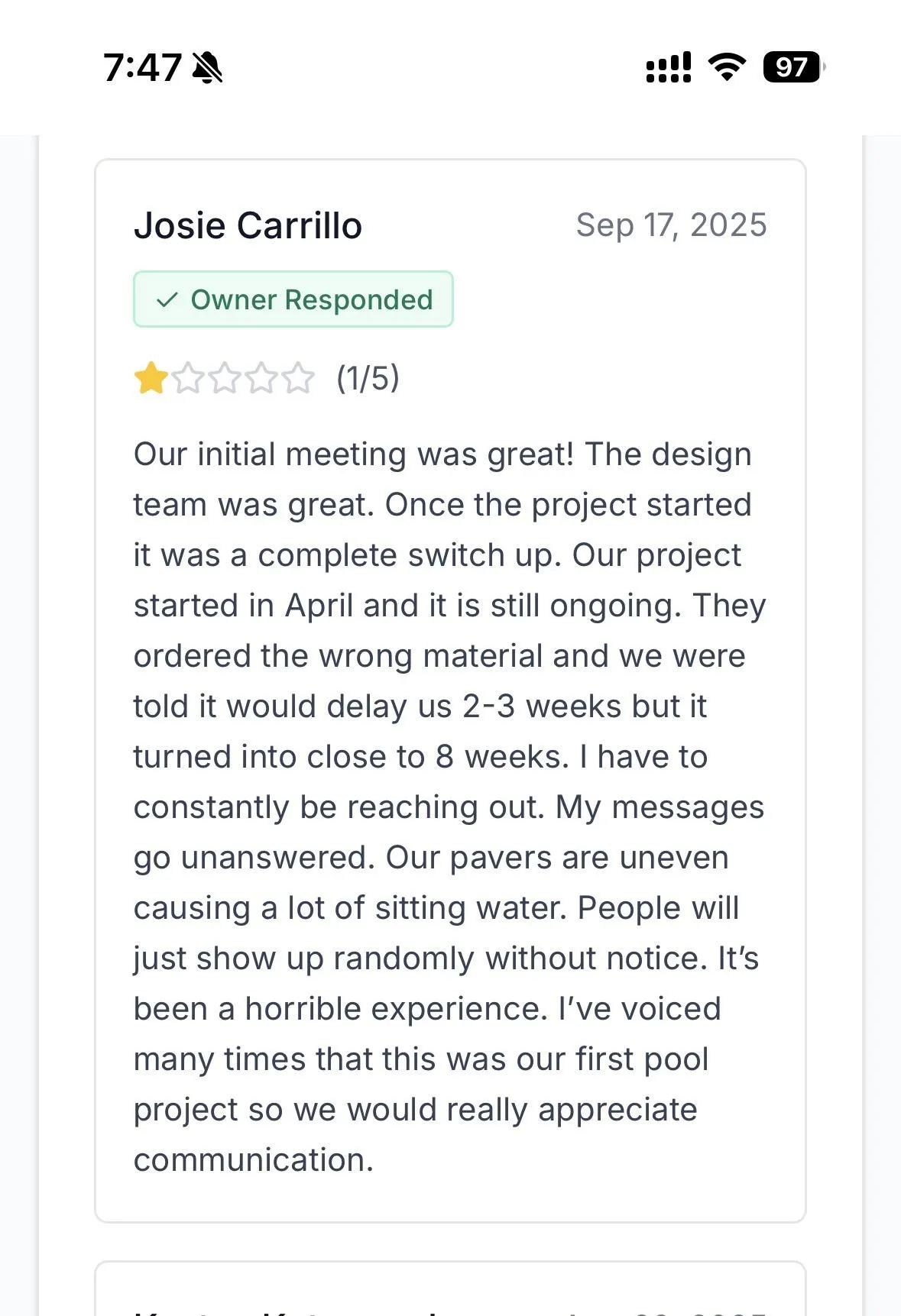
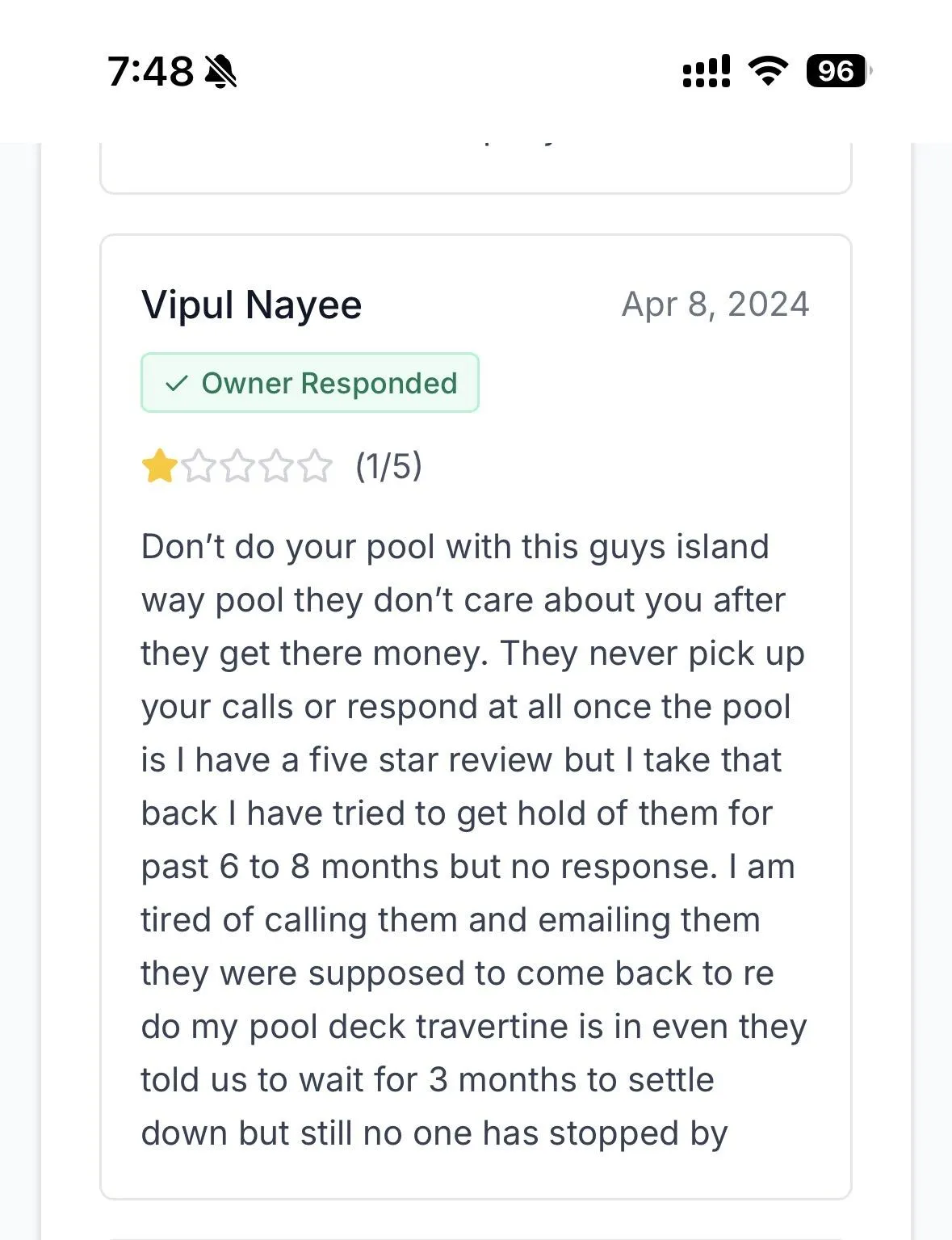
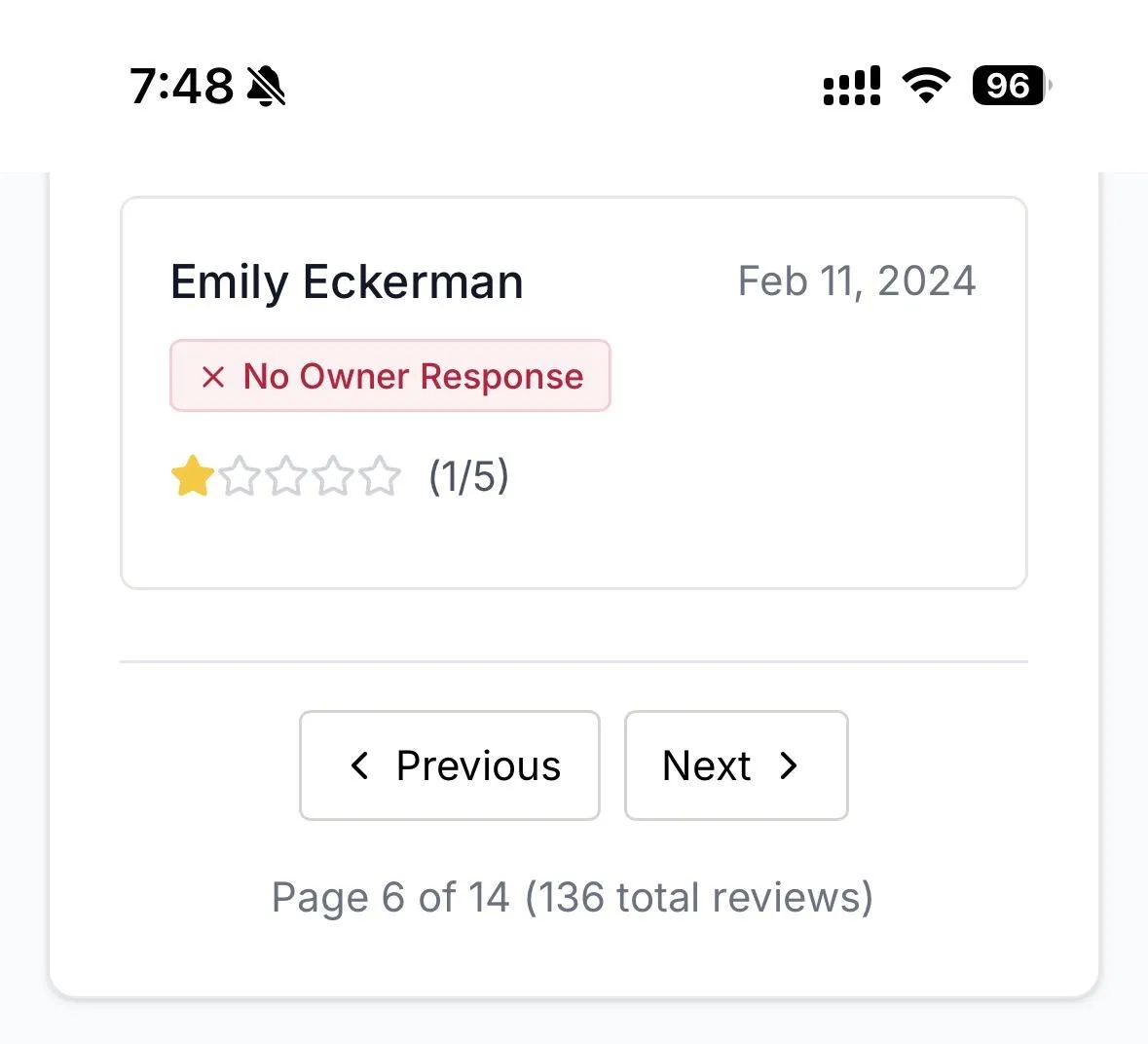
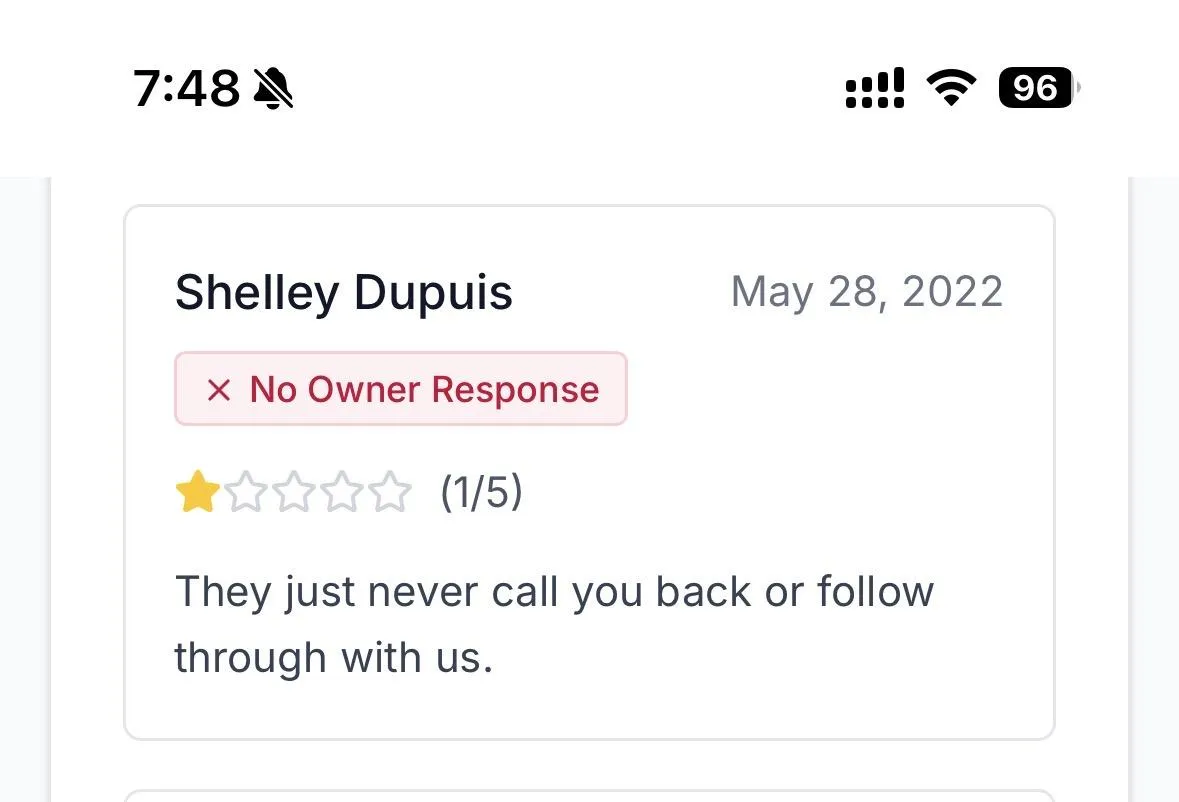
Where did these and many more online reviews go? A great question for GOOGLE.
Speaking with homeowners, they were allegedly not asked permission to have them removed, with the issues described not rectified.
Victim Public Comment Forum
Public Comment Disclaimer
Comments on this page are submitted by third parties and do not represent the views of Contractor Alert.
By submitting content, users represent and warrant that their statements are truthful, based on personal experience or clearly stated opinion, and do not violate any applicable laws, including those related to defamation.
Contractor Alert is a neutral platform and does not endorse or verify user-submitted content. All liability for posted material remains with the individual user.
Contractor Alert reserves the right to review, moderate, remove, or preserve content.
Prohibited Content:
1. Allegations of criminal activity unless supported by: a police report number a filed lawsuit (case number) or verifiable public record.
2. Statements claiming someone is/committed a “Scam / Scammer”, “Fraud / Fraudulent”, “Theft / Thief / Stole”, “Criminal”, “Ponzi scheme”etc. without documented evidence.
3. Threats, harassment, or abusive language.
4. Posting personal information (addresses, phone numbers, family details).
5. False or misleading statements presented as fact.
6. Statements made on behalf of others (must be first-hand experience only).
How to Post Safely:
1. Speak from your own experience only.
2. Use phrases like: “In my experience…” “I paid $X on [date] and have not received…”.
3. Avoid conclusions about intent (e.g., don’t say “they stole,” say what happened).